The short answer
Meditation can help some people manage stress, but it is not a cure, not a personality test, and not a replacement for sleep, safety, therapy, medication, medical care, social support, or changing a harmful environment.
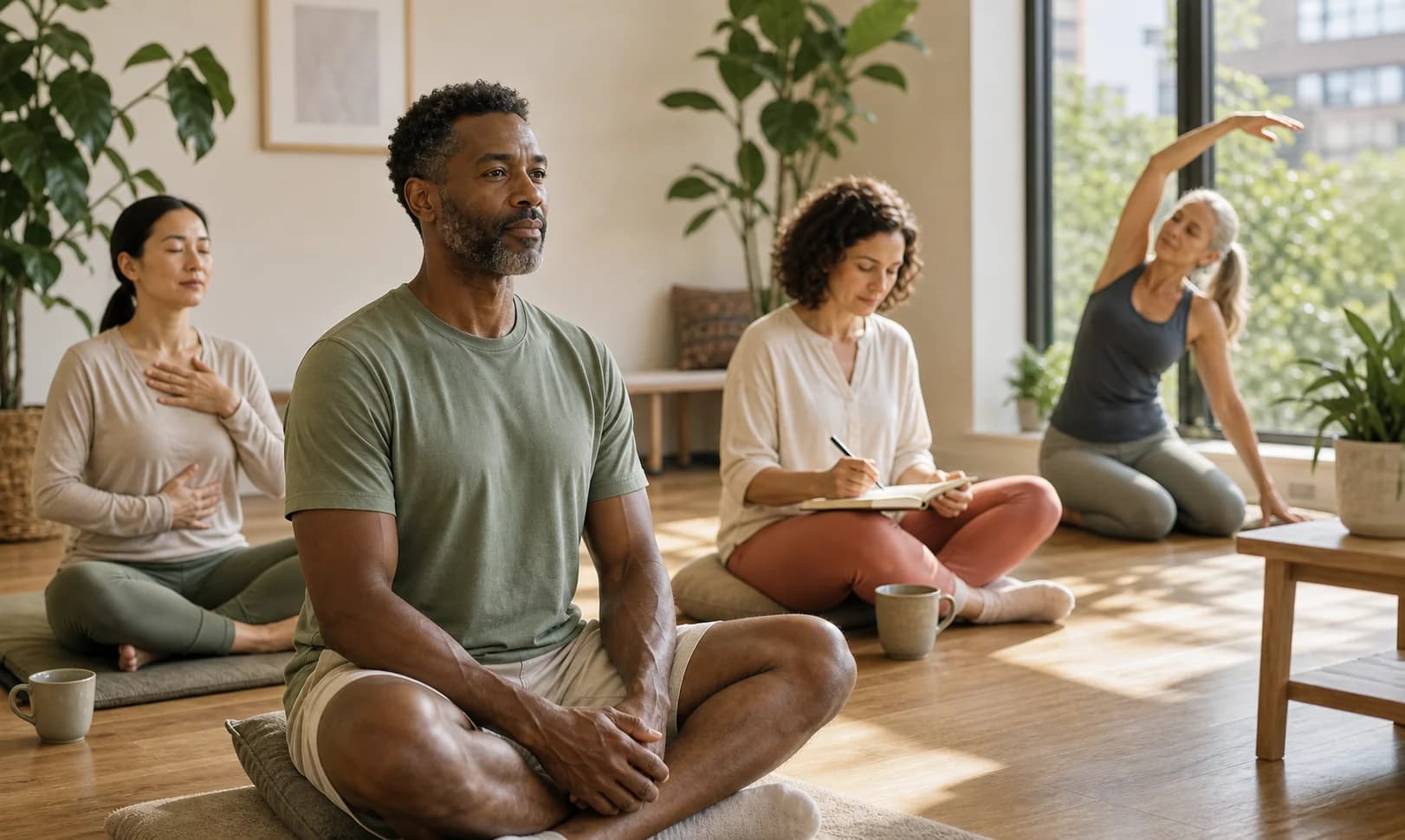
The useful version is modest and practical: a few minutes of attention training, breathing awareness, prayerful silence, mindful walking, body scanning, journaling, gentle yoga, tai chi, qigong, or time in nature can give the nervous system a pause and help a person respond instead of react.
The risky version is when meditation is sold as a magic fix for trauma, depression, anxiety, chronic pain, burnout, poverty, abuse, grief, severe loneliness, or unsafe work. Some people feel worse when they meditate, especially if stillness brings up panic, trauma memories, dissociation, intrusive thoughts, or intense body sensations. That does not mean they failed. It means the practice needs to be changed, supported, or stopped.
Stress regulation belongs in a longevity plan because stress affects sleep, appetite, blood pressure, pain, libido, relationships, training recovery, alcohol use, decision-making, and whether healthy habits feel possible. But Healthopathy's standard is clear: stress practices should make life safer and more workable, not teach people to quietly tolerate harm.
What stress actually is
Stress is not always bad.
The body needs a stress response to wake up, move, focus, compete, protect itself, care for others, and survive danger. Heart rate can rise, breathing can change, attention can narrow, muscles can tense, digestion can shift, and hormones can prepare the body to act.
The problem is not one stressful moment. The problem is when the system stays activated too often, too intensely, or without recovery.
That can happen through work pressure, caregiving, grief, financial insecurity, discrimination, unsafe relationships, chronic pain, poor sleep, illness, trauma reminders, loneliness, overtraining, social media overload, alcohol, shift work, and simply carrying too much for too long.
Stress is also not only mental. It lives in the body:
- Tight jaw, neck, shoulders, or pelvic floor
- Digestive changes
- Headaches
- Chest tightness or rapid breathing
- Sleep disruption
- Appetite changes
- Irritability or shutdown
- Low libido or sexual avoidance
- More pain sensitivity
- Cravings for alcohol, nicotine, sugar, or scrolling
- Difficulty concentrating
Meditation is one tool for noticing and regulating that system. It is not the only tool.
What meditation and mindfulness can realistically do
Meditation is a family of practices, not one thing.
Some practices focus on breath. Some focus on body sensations. Some use prayer, mantra, compassion, sound, movement, or open awareness. Mindfulness usually means paying attention to the present moment with less automatic judgment.
For some people, these practices can help with:
- Noticing stress earlier
- Pausing before reacting
- Reducing rumination
- Supporting sleep routines
- Improving emotional regulation
- Making cravings less automatic
- Creating a calmer transition between work and home
- Supporting pain coping when used appropriately
- Helping sexual communication by reducing reactivity
- Making healthy habits feel less like a fight
The evidence is not "meditation fixes everything."
It is more honest to say: meditation and mindfulness may provide small to moderate benefits for some stress, anxiety, mood, pain, sleep, and wellbeing outcomes, depending on the person, the practice, the teacher, the condition, the dose, and the comparison group.
That is still useful. A tool does not need to be miraculous to be worth using.
What the evidence can and cannot say
| Claim | Evidence | Practical meaning | Caution |
|---|---|---|---|
| Meditation can help some people with stress | Moderate and mixed evidence supports mindfulness-based approaches for some stress and wellbeing outcomes. | Try a small, low-pressure practice and judge it by whether your life works better. | Do not treat meditation as a cure or a substitute for care when symptoms are serious. |
| Mindfulness may support anxiety or depression symptoms for some people | Research suggests possible benefits, but effects vary and clinical care may still be needed. | Use mindfulness as one support, especially alongside therapy, sleep, movement, and social support. | Severe depression, panic, suicidal thoughts, psychosis symptoms, or trauma responses need qualified support. |
| Meditation can feel unpleasant or destabilizing | Reports and research describe adverse experiences in some meditators. | If a practice increases distress, stop, shorten it, open your eyes, move, ground, or seek guidance. | Do not push through panic, dissociation, flashbacks, or severe distress to prove discipline. |
| Movement-based practices may be better for some people | Yoga, tai chi, qigong, and mindful walking can combine attention, breathing, and movement. | If sitting still is too much, use a grounded body-based practice. | Pain, pregnancy, balance issues, injuries, and some medical conditions require modification. |
Stress regulation is bigger than meditation
Meditation is only one doorway.
Some people regulate through stillness. Others regulate through movement, prayer, chanting, breath awareness, music, cooking, gardening, walking, therapy, faith community, journaling, stretching, social connection, nature, or finally setting a boundary.
That matters because a global health brand should not pretend the only valid stress practice is a modern app-based mindfulness session.
Many cultures have long used rituals that downshift the body: prayer, communal meals, evening walks, breathing with movement, devotional singing, prostration, martial arts, tea rituals, sauna or bathing traditions, time outdoors, storytelling, grief rituals, and elders offering perspective. These practices are not all identical to clinical mindfulness. They may still support rhythm, meaning, belonging, and nervous-system settling.
Healthopathy's rule:
If a practice increases safety, connection, awareness, recovery, and wise action, it may be useful.
If a practice teaches passivity inside harm, delays necessary care, increases shame, or makes distress worse, it needs to change.
The beginner-safe starting point
Most people do not need a 45-minute meditation routine.
Start with two minutes.
Beginner-safe stress practices
| Practice | How to start | Best fit | Stop or change if |
|---|---|---|---|
| Breath awareness | Sit or stand with eyes open. Notice the next 5 to 10 breaths without forcing them. | People who need a quick pause between tasks. | Breath focus creates panic, air hunger, dizziness, or obsessive control. |
| Grounding | Name five things you see, four things you feel, three sounds, two smells, and one thing you can do next. | People who feel scattered, overwhelmed, or unreal. | It increases distress or feels unsafe in the environment. |
| Mindful walking | Walk slowly or normally and feel your feet, arms, surroundings, and breathing. | People who dislike sitting still or feel better with movement. | Pain, dizziness, unsafe streets, or compulsive step counting takes over. |
| Journaling | Write: What am I feeling? What is one next useful action? What can wait? | People with rumination, decision stress, or emotional backlog. | Writing becomes self-attack or endless analysis. |
| Gentle stretch or yoga | Use easy positions and normal breathing for 3 to 10 minutes. | People with body tension who need movement. | Pain, numbness, dizziness, pelvic symptoms, or injury signs appear. |
The first rule is safety.
Keep your eyes open if closing them feels bad. Sit near a door if that helps. Stand if sitting makes you anxious. Move if stillness is too intense. Use a short timer. Stop before you feel trapped.
The goal is not to win meditation.
The goal is to build a trustworthy pause.
Breathwork: useful, but do not force it
Breathing exercises are popular because they are portable. You can do them at a desk, in a parked car, before a difficult conversation, or after a stressful message.
But breathwork is not automatically gentle.
Fast breathing, long breath holds, intense hyperventilation-style practices, or forceful breathing can make some people dizzy, panicky, tingly, lightheaded, or emotionally flooded. People with panic, trauma histories, pregnancy, heart or lung conditions, fainting, seizures, or certain psychiatric symptoms should be cautious and seek qualified guidance for intense practices.
For a beginner, keep it simple:
- Breathe normally and notice the breath.
- Lengthen the exhale slightly if it feels comfortable.
- Try a sigh: inhale gently, then exhale slowly.
- Put one hand on the chest and one on the belly only if that feels grounding.
- Stop if the practice makes symptoms worse.
Breathwork should make the body feel more available, not less safe.
When meditation can make things worse
Some wellness content avoids this because it ruins the sales pitch.
But readers deserve the truth: meditation can bring up difficult experiences.
Possible problems include:
- Panic or increased anxiety
- Flashbacks or trauma memories
- Dissociation or feeling unreal
- Intrusive thoughts becoming louder
- Body sensations feeling frightening
- Shame because "I cannot do it right"
- Grief or anger surfacing too quickly
- Sleepiness that hides exhaustion rather than restores it
- Spiritual or existential distress in some contexts
If this happens, the answer is not "try harder."
Try one of these instead:
- Open your eyes.
- Look around the room and name what is present.
- Stand up.
- Walk.
- Feel your feet on the floor.
- Shorten the practice to 30 seconds.
- Switch to journaling or movement.
- Practice with a trauma-informed therapist or teacher.
- Stop the practice for now.
Red flags: when stress needs care, not a hack
Stress tools are not enough when symptoms point to urgent risk or serious mental-health needs.
If you are in immediate danger or may hurt yourself or someone else, use local emergency services or a crisis line in your country. Healthopathy is education, not crisis care.
The point of naming this is not to frighten people. It is to stop pretending that a breathing exercise can carry situations that need human help.
Stress and sleep
Stress and sleep can trap each other.
Stress can make sleep shallow, delayed, fragmented, or full of early waking. Poor sleep then makes stress harder to regulate the next day. A tired brain has less patience, less impulse control, more cravings, more pain sensitivity, and a harder time seeing options.
Meditation can sometimes help as part of a sleep routine, especially when it lowers rumination. But if someone has insomnia, sleep apnea symptoms, severe anxiety, trauma nightmares, pain, alcohol dependence, restless legs, medication effects, or shift-work strain, generic meditation is not enough.
Practical sleep-linked stress moves:
- Create a 10-minute buffer between work and bed.
- Put the phone away from the bed.
- Write tomorrow's worries on paper before the sleep window.
- Use a short grounding exercise with eyes open.
- Choose a repeated wake time when possible.
- Seek care for snoring, gasping, severe daytime sleepiness, or persistent insomnia.
Stress regulation should make sleep easier. It should not become another bedtime performance test.
Stress and sexual health
Stress can affect sexual wellbeing without meaning anything is "broken."
Stress can reduce desire, make arousal harder, increase pelvic tension, worsen pain, reduce erection reliability, make orgasm harder, increase premature ejaculation risk for some people, create avoidance, or turn sex into another demand. It can also make conversations more reactive.
But stress is not always the only explanation.
Sexual symptoms can also involve blood flow, diabetes risk, blood pressure, hormones, menopause, pregnancy, postpartum recovery, pelvic floor issues, infections, medications, trauma, relationship safety, depression, sleep, alcohol, and pain.
Use stress practices as support, not as a way to dismiss symptoms.
If there is pain, bleeding, persistent erectile change, sudden desire change with distress, STI symptoms or exposure, coercion, trauma responses, or relationship fear, the next step is not only meditation. It may be medical care, pelvic health care, therapy, safer-sex support, or safety planning.
A seven-day stress reset
This reset is not a cure. It is a way to find which stress lever actually helps.
7-day stress-regulation reset
| Day | Focus | What to do | What to notice |
|---|---|---|---|
| Day 1 | Stress map | Write down the top three stressors and circle which one is changeable, which needs support, and which needs acceptance for now. | Whether the problem is emotion, logistics, safety, health, money, relationship, or overload. |
| Day 2 | Two-minute pause | Try two minutes of breath awareness, grounding, prayerful silence, or mindful walking. | Does stillness help, irritate, numb, or intensify distress? |
| Day 3 | Body release | Do 5 to 10 minutes of gentle walking, stretching, yoga, tai chi-inspired movement, or mobility. | Whether your body prefers movement over sitting. |
| Day 4 | Phone boundary | Create one 20-minute no-scroll window, ideally before bed or after waking. | Whether attention feels less hijacked. |
| Day 5 | Connection | Send one honest message, ask for help, or have a low-pressure conversation. | Whether stress decreases when it is shared safely. |
| Day 6 | Sleep support | Write tomorrow's tasks before bed and use a short grounding practice. | Whether rumination decreases or sleep feels easier. |
| Day 7 | Keep one lever | Choose the one practice that helped most and schedule it three times next week. | Whether the practice is realistic enough to repeat. |
If the reset reveals severe distress, unsafe relationships, panic, trauma symptoms, or inability to function, that is not failure. That is information. The next step may be support.
How to choose the right practice
Different nervous systems need different doors.
Match the practice to the state
| If you feel | Try first | Why it may fit | Avoid starting with |
|---|---|---|---|
| Agitated or restless | Walking, gentle cycling, shaking out arms, stretching, or cleaning one small area. | Movement can discharge activation before stillness is possible. | A long silent sit that feels like punishment. |
| Numb or shut down | Light, water, a short walk, music, texting a safe person, or naming objects in the room. | Gentle sensory input can restore orientation. | Forcing deep introspection immediately. |
| Ruminating | Journaling, worry list, planned problem-solving window, or breath awareness. | The mind may need a container before it can settle. | Endless analysis disguised as journaling. |
| Lonely | Connection, group practice, faith community, walking with someone, or therapy. | Some stress is social pain and needs social repair. | Using meditation to avoid every human need. |
| Unsafe | Safety planning, local support, crisis resources, trusted people, or emergency help. | Regulation is not enough when the environment is dangerous. | Any practice that teaches you to tolerate harm quietly. |
This is where many wellness brands fail. They sell the same practice to everyone.
Healthopathy should not.
What to track without becoming obsessive
Track whether the practice improves life.
Good signals:
- You pause before reacting.
- Sleep transitions feel easier.
- You recover faster after conflict.
- You notice body tension earlier.
- You drink less alcohol to calm down.
- You communicate more clearly.
- You stop using sex, food, work, scrolling, or exercise as the only escape.
- You seek support sooner.
Bad signals:
- You feel more ashamed.
- You feel trapped in your body.
- Panic increases.
- You become more isolated.
- You use meditation to avoid hard conversations.
- You ignore symptoms or unsafe situations.
- The practice becomes another perfection project.
The best stress practice is not the one that looks most spiritual.
It is the one that makes your next wise action easier.
The bottom line
Meditation and mindfulness can help some people regulate stress. They can support sleep, mood, cravings, pain coping, relationships, sexual communication, and health habits. But they are tools, not cures.
Start small. Keep your eyes open if needed. Use movement if stillness is too much. Stop if a practice makes distress worse. Seek qualified support for trauma, panic, severe depression, suicidal thoughts, psychosis symptoms, unsafe relationships, substance danger, or major functional impairment.
The goal is not to become a calm-looking person.
The goal is to build enough safety, awareness, support, and recovery that your life becomes easier to inhabit.